
RISESCORE™ · HOW IT WORKS
One number for how reliably you work with AI.
RiseScore is RiseCert’s free AI-fluency assessment: fifteen questions about what you actually do, scored from 0 to 1000 across five competencies. This page shows what the score measures, what each band means, and how you can share and verify your result.
0–1000
the scale
5
competencies
15
questions · 4–6 min
Free
always, every point
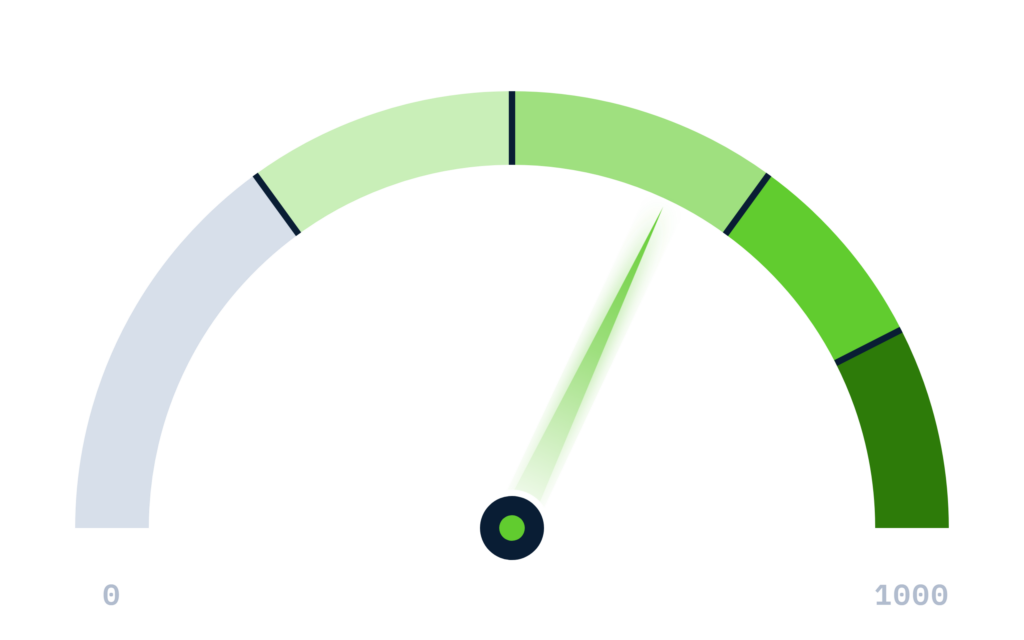
Five bands · 0–1000 · needle shown at 640, Proficient
WHAT IT MEASURES
Five competencies, weighted toward the failures that cost employers most.
RiseScore claims one thing: how reliably you produce trustworthy work with AI tools, as of a given date. Not enthusiasm, not tool count, not hours of training watched. Each competency is measured by three questions about what you do, with answers running from weakest to strongest practice.
25%
weight
Evaluation & Verification
Measures: Catching wrong output before it ships.
Why this weight: The one failure that creates legal, financial and reputational loss. Deliberately the heaviest, and one of the two that gate the band.
20%
weight
Prompting & Direction
Measures: Getting the intended result, repeatably.
Why this weight: The highest-frequency skill; visible in daily output quality.
20%
weight
Workflow Integration
Measures: Redesigning work, not just speeding up steps.
Why this weight: Where the actual productivity gain lives.
20%
weight
Risk, Ethics & Disclosure
Measures: Data handling, disclosure, and the rules of your field.
Why this weight: Regulatory exposure; the dimension employers are liable for. The second gating competency.
15%
weight
Tool Fluency & Currency
Measures: Breadth, judgment between tools, keeping up.
Why this weight: Perishable and easy to self-teach, so weighted lowest.
Why these weights
Weights are a v1.0 design judgment, informed by employer risk surveys, and will be recalibrated against real results. In McKinsey’s 2024 survey of 1,491 business professionals, inaccuracy was the generative-AI risk organizations most tried to mitigate, and only 27% said employees review all AI-generated content before it is used. IBM’s 2025 Cost of a Data Breach report found breaches involving unsanctioned “shadow AI” cost about $670,000 more on average than those without it.
What RiseScore does not claim
That you are a good employee, that you can build AI systems, or that you are competent in your underlying profession. Overclaiming is how credentials lose authority, so the score measures AI fluency and nothing else.
THE FIVE BANDS
What the number says about you.
Bands turn a score into a sentence an employer can read. The v1.0 thresholds were set by judgment and are provisional; they will be recalibrated from real results and published as a new version, and every result keeps the version it was scored under.
FOUNDATION · 0–299
PRACTITIONER · 300–499
PROFICIENT · 500–699
ADVANCED · 700–849
DISTINGUISHED · 850–1000
0–299
Foundation
You have met the tools, but they have not changed how you work yet. A common place to start and the fastest one to move out of.
300–499
Practitioner
You use AI regularly for discrete tasks and get real value from it. What is missing is consistency and a dependable way to tell good output from output that merely sounds right.
500–699
Proficient
AI is part of how you work rather than an add-on, and your verification habits are real. That puts you ahead of most professionals in most fields.
700–849
Advanced
You redesign processes around these tools and other people adopt what you build. You could teach this.
850–1000
Distinguished
You operate at a level that sets the standard for others. This band is rare by design.
Your result also shows the two weakest competencies as priorities, and three course recommendations drawn from them and from your industry and role. Completing a course never changes a RiseScore. Only retaking the assessment can.
SHARE & VERIFY
Private by default. Public only when you say so.
A score is only worth having if someone else can check it. RiseScore makes that free and instant for anyone with the link, while leaving you in control of whether the link exists.
1
Finish the assessment
You get a private result page straight away: score, band, competency bars, the two priorities to fix first and three course recommendations. Leave your email and we send you the private link so you can come back to it.
2
Choose to share
Nothing is public until you ask. Add your name and we create a public RiseScore page at risecert.org/r/your-code plus a score card image. The page shows only your name, score, band, seal, date and breakdown. Never your email, industry or role.
3
Put it on LinkedIn
Share the page, or add it under Licenses & Certifications. The entry is titled with your score, band and “Self-assessed”, issued by RiseCert, with your page as the credential URL. Your score card is the link preview wherever you post it.
4
Anyone can verify, free
Your public page always shows the live state of the result, so a stale screenshot is checkable by whoever opens the link. You can make the page private again at any time from your result link, and deletion requests are honored within 30 days.
GET YOUR RISESCORE
How AI-fluent are you, really?
Fifteen questions, four to six minutes, free. You get your score out of 1000, your band, a breakdown across the five competencies, the two things worth fixing first and a score card you can share.
RiseScore™ v1.0 is a self-assessed instrument from RiseCert. Bands are provisional and will be recalibrated openly as results accumulate; every result carries the version it was scored under. Every point is reachable at no cost, and completing a course never changes a score.